Sponsored article
In today’s digital era, education is continuously evolving, incorporating cutting-edge technologies to enhance learning experiences. Augmented reality (AR) stands at the forefront of this transformation, offering a powerful medium to engage students and propel their understanding. With AR, educational content leaps off the page, actively involving learners and reshaping traditional methods. This article delves into the profound impact of augmented reality on digital learning environments, revealing its boundless potential for revolutionizing education.
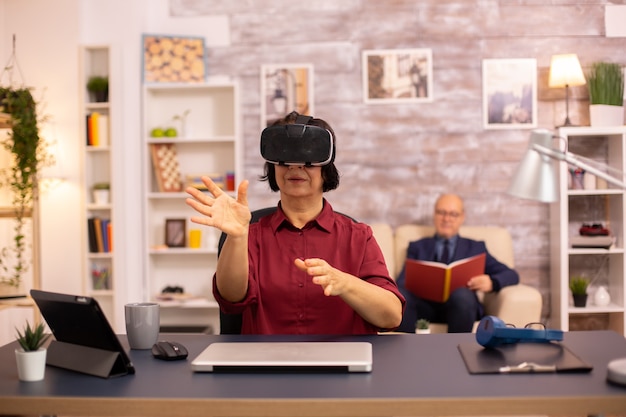
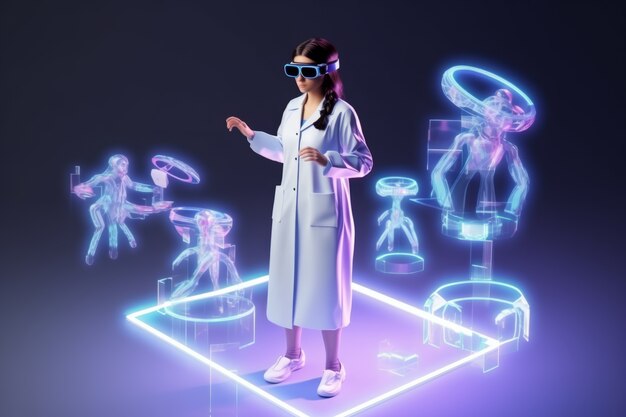
Augmented reality is reshaping the landscape of digital education by introducing an unparalleled level of engagement in interactive learning experiences. By overlaying digital information onto the real world, AR transforms mundane lessons into captivating adventures that stimulate curiosity and enhance student involvement. Learners are no longer passive recipients of information; instead, they actively partake in their educational journey as they visualize abstract concepts with real-time, immersive visuals. This innovative approach to digital education fosters deeper understanding and retention of knowledge as students interact with life-like 3D models and simulations that were previously inconceivable in traditional settings.
Numerous AR applications are already capturing students’ attention and driving motivation in classrooms across the globe. For instance, applications like “Merge Cube” allow students to explore the solar system through a handheld, holographic display, while others such as “Civilisations AR” bring historical artifacts to life, enabling learners to examine intricate details up close. These groundbreaking tools not only elevate engagement but also ignite a passion for discovery, demonstrating the immense potential of augmented reality to revolutionize educational experiences.
One of the transformative AR benefits in the realm of education is its capacity to deliver personalized learning experiences. By leveraging augmented reality, educators can provide customized education tailored to meet diverse student needs. AR technology enables content to be adapted seamlessly to the individual learning pace and style of each student, ensuring a more engaging and effective educational journey. For instance, visual learners can benefit from immersive, 3D representations of complex concepts, while kinesthetic learners can interact with digital elements to reinforce understanding. Thus, AR makes learning more accessible and inclusive, accommodating various learning preferences and abilities.
Furthermore, augmented reality in personalized learning creates opportunities for real-time feedback and assessment, allowing educators to refine their teaching strategies based on precise insights into student performance. This adaptability not only nurtures a supportive learning environment but also empowers students by giving them autonomy over their educational experiences. As a result, AR-driven customized education fosters motivation, engagement, and a deeper understanding of the subject matter, facilitating a more profound and lasting impact on student success.
Implementing augmented reality in educational institutions presents several significant challenges that educators and administrators must navigate to harness its full potential. One of the primary obstacles is cost. The technology required to support augmented reality can be expensive, ranging from high-performance hardware to specialized software. Educational institutions often operate with constrained budgets, making it difficult to allocate funds toward such advanced implementations. This financial burden can hinder efforts to incorporate augmented reality into the curriculum on a large scale, limiting its impact and accessibility.
Another challenge in the implementation of augmented reality is accessibility. Not all schools have the requisite technological infrastructure, such as reliable internet connections or modern computer laboratories, necessary to support these advanced tools. Additionally, there is a pressing need for comprehensive training for educators to effectively integrate augmented reality into their teaching methods. Without proper training, even the most sophisticated technology can fail to deliver its intended educational benefits, further widening the digital divide among institutions.