Sponsored article
In the dynamic world of food manufacturing, efficiency is key to staying competitive. As the market demands rapid production cycles and consistent product quality, food manufacturers are increasingly turning to automated packaging solutions. By streamlining packing processes and minimizing human error, these technologies help optimize operational workflows. Explore the transformative impact of automation in food packaging and take a closer look at its role in enhancing efficiency and productivity.
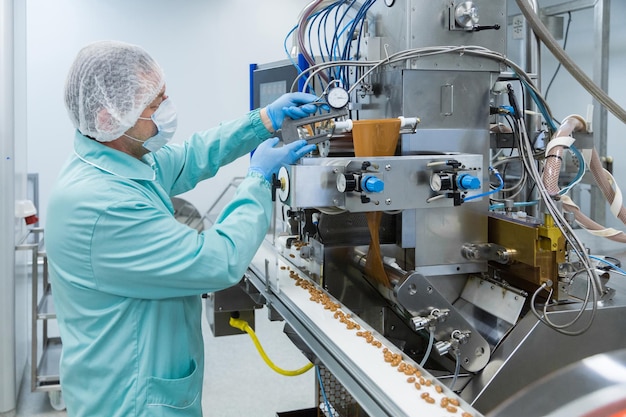
In the realm of food manufacturing, the role of automation in food packaging is vital to enhancing overall efficiency. Automation technology seamlessly integrates into packaging processes, dramatically streamlining operations and ensuring a consistent quality of output. By reducing manual intervention, automated solutions minimize the risk of human error, thereby maintaining product integrity and ensuring adherence to safety standards. The incorporation of state-of-the-art technology facilitates these advancements, allowing for rapid and precise filling, sealing, coding, and labeling. Companies like Rafpol, a prominent distributor of advanced packaging machinery, lead the way in this integration by providing tailored solutions that cater to the specific needs of food manufacturing enterprises. With a focus on technology integration, these automated systems not only optimize efficiency but also bolster productivity, enabling manufacturers to meet increasing consumer demands while maintaining cost-effectiveness. Automation thus plays a crucial role in modernizing the food packaging industry.
In the competitive landscape of food manufacturing, the adoption of automated packaging solutions offers substantial benefits that drive success. One key advantage is the significant reduced costs associated with automating processes. By minimizing manual tasks, companies can lower their reliance on a large workforce, thereby decreasing labor expenses while simultaneously decreasing the likelihood of human error. This shift not only supports financial savings but also leads to enhanced productivity through faster and more efficient packaging operations. Automated solutions ensure streamlined workflows and high throughput, allowing manufacturers to meet market demands swiftly without sacrificing product quality. Additionally, these systems improve labor efficiency, enabling team members to focus on more strategic, value-added tasks instead of monotonous manual labor. Ultimately, automated packaging solutions empower food manufacturers to achieve higher levels of efficiency and competitiveness, ensuring sustainable growth and customer satisfaction.
The integration of automated packaging solutions in the food industry is not without its challenges. One significant hurdle is the initial cost, as high upfront investments are required for advanced technology and machinery. Furthermore, scalability becomes an issue as companies struggle to adapt systems that cater to varying production volumes and evolving consumer demands. Despite these challenges, the food industry continues to forge ahead, with future trends pointing towards remarkable innovation. The use of AI and machine learning to optimize packaging processes indicates a shift towards smarter, more adaptable systems. Moreover, sustainability remains a priority, pushing the development of eco-friendly packaging solutions that reduce waste and energy consumption. Scalability is also being addressed with modular systems that allow food manufacturers to expand capabilities without significant overhauls. As these trends progress, the potential for technological advancements offers hope for overcoming the existing challenges and setting new benchmarks in efficiency and sustainability within the food industry.